Machine Learning Engineer | ML for Finance
Building data-driven financial systems using machine learning and software engineering.
Interested in computational finance or machine-learning-driven finance? Let's talk.

QuantumEdge AI
Builing an enterprise-scale financial intelligence platform to demonstrate end-to-end ML engineering capabilities. The system processes real-time financial news and market data to generate actionable trading insights through GPU-accelerated sentiment analysis and multi-horizon price forecasting. Trained custom transformer models (FinBERT, Temporal Fusion Transformer) with CUDA optimization and mixed-precision training, achieving production-grade accuracy metrics. Architected a cloud-native backend with FastAPI and PostgreSQL pgvector for vector similarity search, implementing advanced optimization techniques (model quantization, dynamic batching, Redis caching) to achieve sub-100ms latency. Developed a responsive React TypeScript dashboard with real-time WebSocket streaming for live market visualization.The architecture integrates transformer models, microservices APIs, vector databases, and real-time streaming into a cohesive production system deployed on AWS cloud infrastructure.
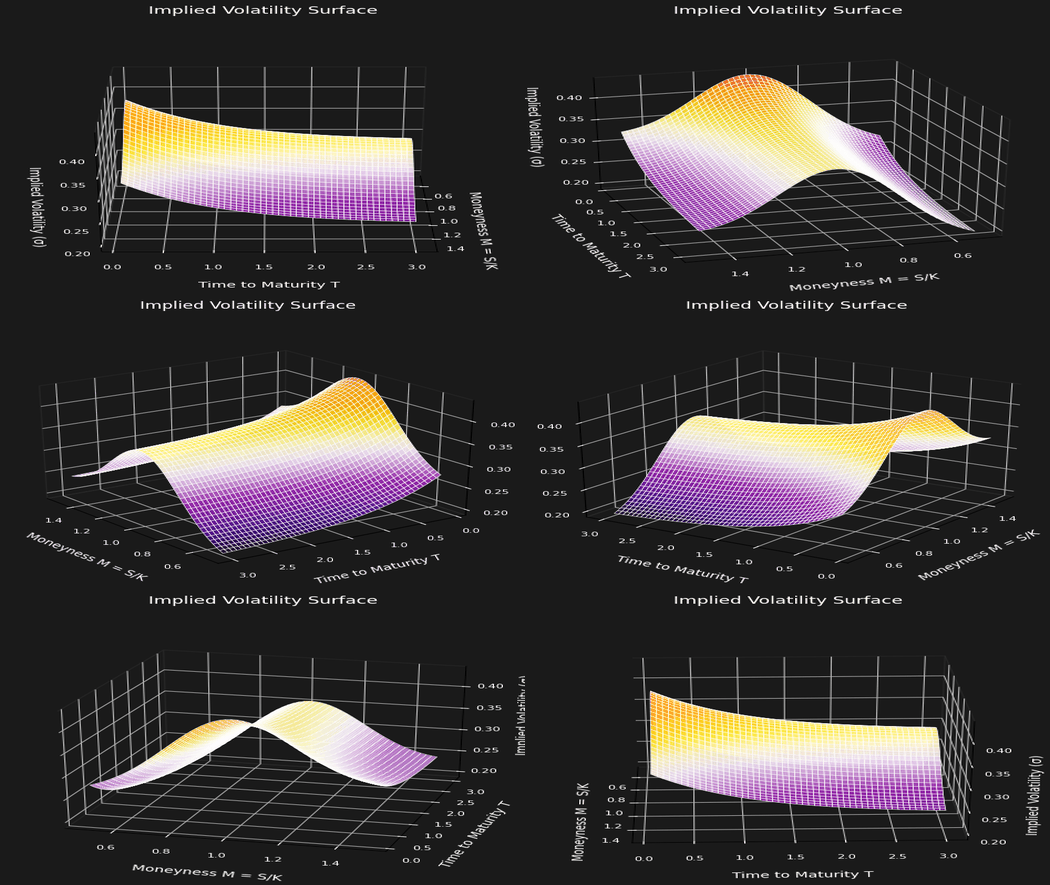
Computational Finance & Quantitative Modeling
A structured implementation of core quantitative finance models and methodologies, progressing from foundational stochastic processes through option pricing, volatility modeling, and portfolio optimization. The repository implements Brownian motion and Geometric Brownian Motion simulations, Black-Scholes pricing with Greeks calculation, Monte Carlo methods, GARCH and stochastic volatility models, and mean-variance portfolio optimization with risk parity approaches. Includes rigorous backtesting frameworks and risk metrics (Sharpe ratio, maximum drawdown, volatility analysis) for model validation and performance evaluation. Emphasizes computational implementation of mathematical models describing asset behavior, risk dynamics, and uncertainty quantification in financial systems. The modular architecture supports experimentation with different modeling assumptions and comparative analysis across methodologies. Serves as a foundation for understanding how mathematical frameworks translate to computational finance applications before extending to machine learning techniques.

Machine Learning Portfolio
A curated portfolio of machine learning and AI projects developed across undergraduate and graduate study, with a primary focus on core machine learning, deep learning, and applied model development. The repository spans supervised and unsupervised learning, neural networks, computer vision, time-series modeling, and optimization, with an emphasis on understanding algorithms, implementing models end-to-end, and evaluating performance through experimentation and visualization. Projects range from foundational implementations to applied ML systems built in Python and PyTorch, reflecting a progression from algorithmic fundamentals to more advanced, research-oriented applications.

Quantum Computing Simulator
Quantum State Engine (QSE) is a modular quantum computing simulator implemented in C++17, providing explicit statevector-based circuit simulation with a cleanly structured backend architecture. The system models qubit registers, unitary gate operations, and probabilistic measurement through complex linear algebra transformations, offering a mathematically rigorous representation of quantum state evolution. The architecture separates core simulation logic from algorithm implementations, supporting statevector-based circuit execution and modular extensibility by design. Implemented algorithms include Grover’s search, the Quantum Fourier Transform (QFT), and quantum teleportation, alongside foundational modules for quantum error correction and variational optimization concepts. The framework also supports experimentation with parameterized quantum circuits (PQCs), forming a basis for quantum machine learning (QML) workflows such as hybrid classical–quantum optimization and variational model training. Built with clear abstraction boundaries, modular compilation units, and performance-conscious memory management, the project demonstrates a from-first-principles implementation of quantum circuit simulation, variational algorithm design, and backend-oriented system architecture in modern C++.
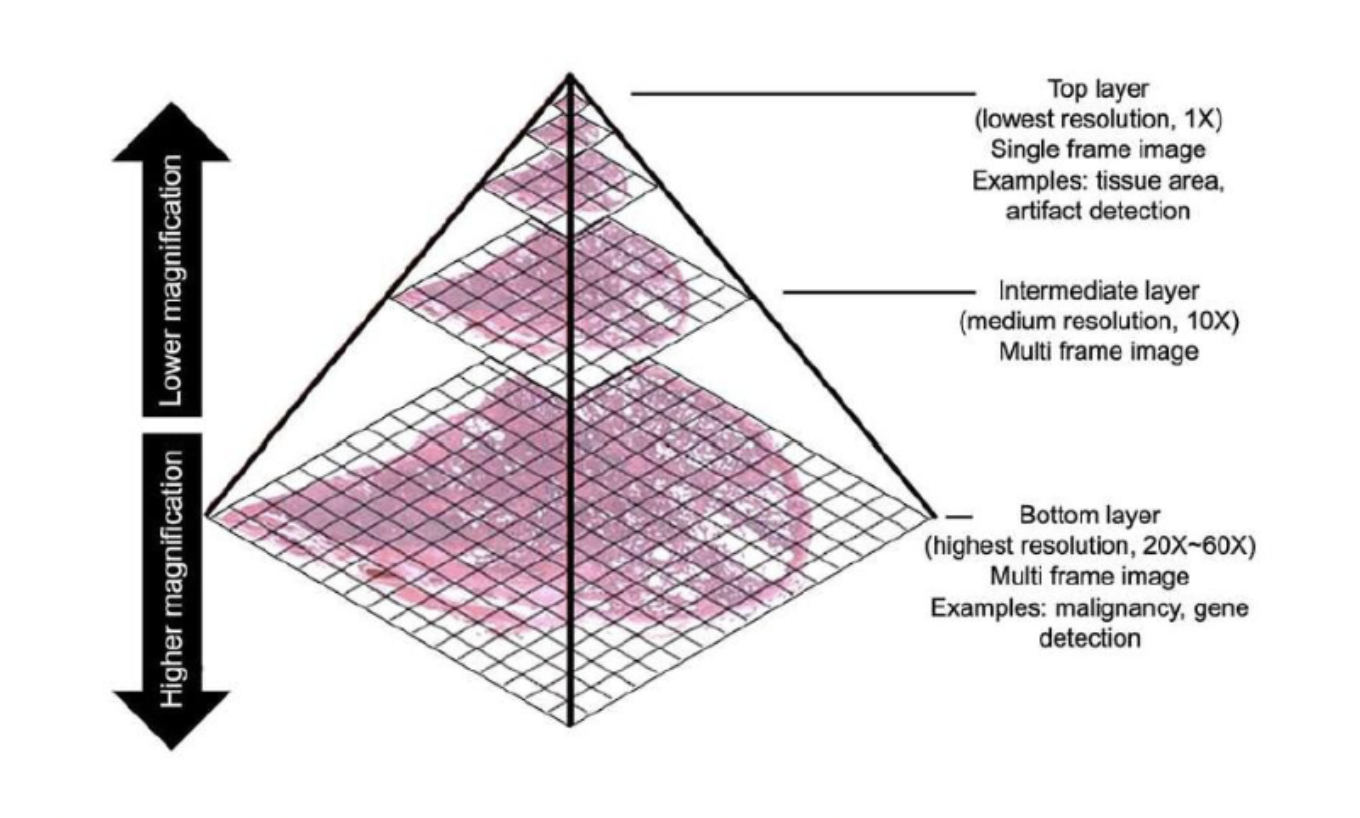
Spatial Analytics Engine
A research-focused framework for spatial–semantic modeling in whole-slide image (WSI) analysis for computational pathology. Spatial-Semantic Mamba (SS-Mamba) preserves 2D spatial structure and meaningful semantic relationships during patch sequencing and aggregation for Multiple Instance Learning. The framework emphasizes efficient preprocessing, spatially aware sequence construction, and state-space modeling using Mamba architectures, enabling linear-time scalability for large-scale pathology slides. Core components include Python-based preprocessing pipelines, spatially informed sequence construction, and Mamba-based state-space models designed to support experimental evaluation, ablation studies, and visualization. The repository is intended for reproducible academic research, benchmarking, and scholarly review rather than production deployment.

Neural Speech Processing & Transcription System
A containerized end-to-end automatic speech recognition (ASR) system built on OpenAI’s Whisper transformer model for neural speech-to-text inference. The platform processes YouTube URLs and local media files, performs high-accuracy transcription, generates synchronized subtitle outputs (.srt, .vtt), and supports optional subtitle translation and hard-coded rendering via FFmpeg. It supports multilingual transcription and translation across multiple languages, including English, Bulgarian, Spanish, French, German, Italian, Russian, and Chinese. The system is fully self-hosted and deployed using Docker, encapsulating model inference, audio preprocessing, media extraction, backend API orchestration, and frontend visualization into a reproducible microservice architecture. Architected as a production-ready neural speech recognition pipeline with fully containerized deployment and integrated media processing.
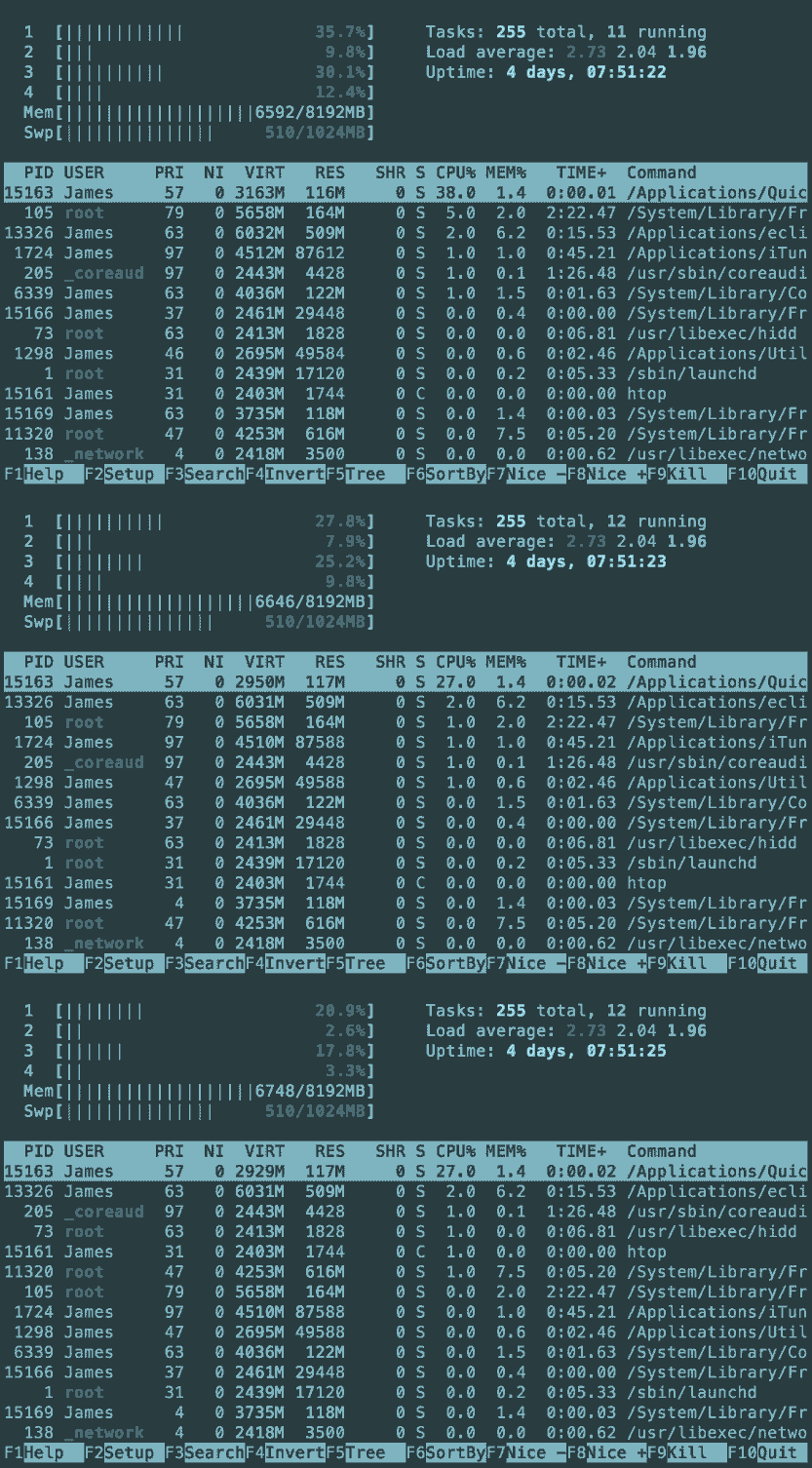
Low-Level Systems Engineering in C
A comprehensive collection of systems-level C projects centered on operating system internals, low-level process control, memory management, scheduling algorithms, and custom data structures. The repository includes kernel-level system call extensions in the OS/161 (MIPS) kernel, a multi-level feedback queue (MLFQ) CPU scheduler with starvation prevention, Unix-style shells supporting job control, signal handling, forking, and inter-process communication, and a custom floating-point arithmetic library implemented via manual bit manipulation and fixed-width integer encoding. These implementations emphasize syscall dispatch, trap handling, user–kernel transitions, register-level argument passing, explicit heap management, linked-list–based process queues, bitwise state encoding, and modular multi-file C design. Several components replicate core OS behaviors such as context switching, scheduling heuristics, and process lifecycle management, reinforcing deep understanding of low-level architecture, ABI conventions, memory safety in unmanaged environments, and performance-conscious systems programming.
Closed-source project — media, details, and demo available on request.